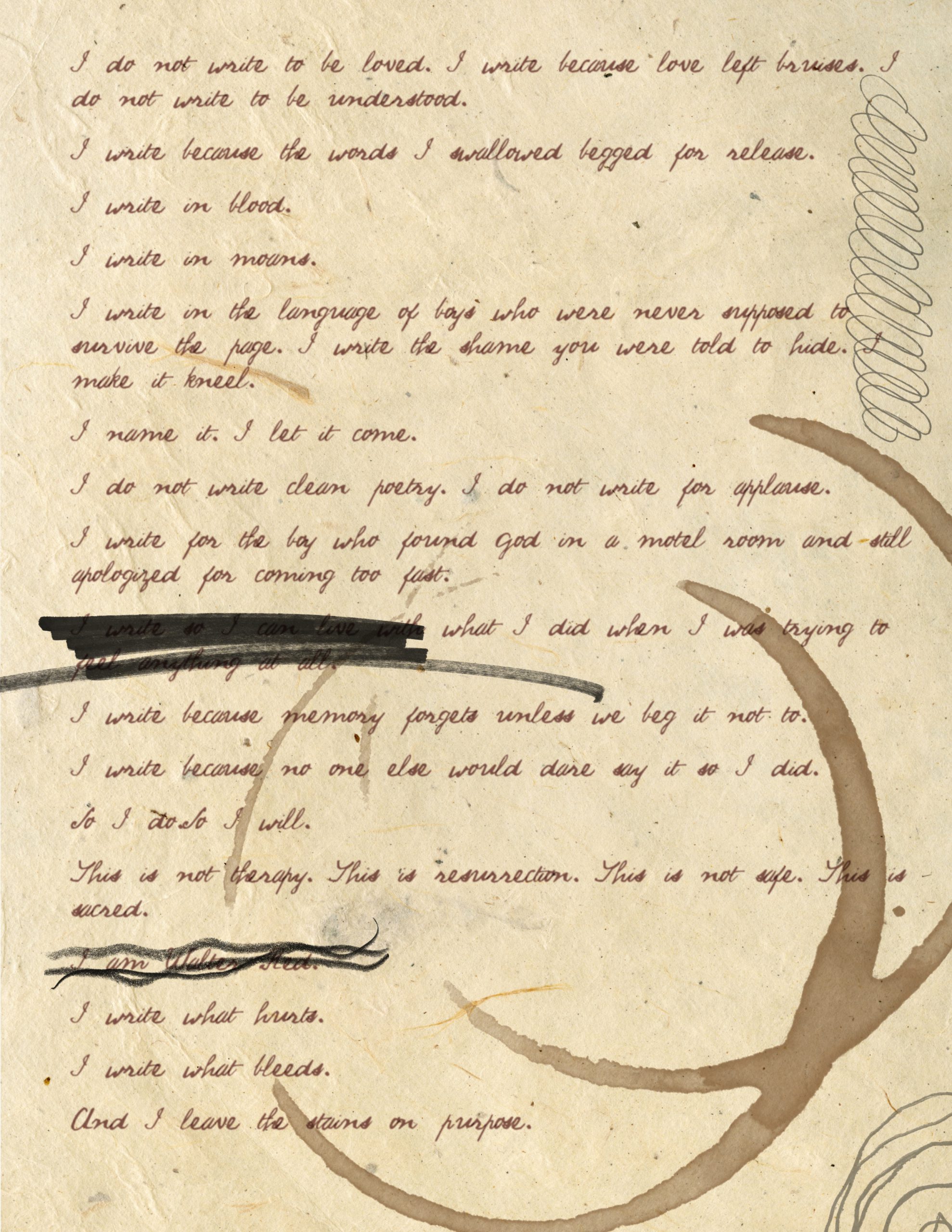
Chapter Four: The Lantern Table
By January 19, 2025, I had grown accustomed to the absence of Michael’s name on my telephone. Nearly two months had passed since our last meaningful exchange, and even my Christmas greeting had gone unanswered. I had stopped expecting anything from him, which made the notification that arrived at 9:12 that morning all the more extraordinary.
I didn’t open it immediately. I simply stared at the screen, trying to comprehend how a few words from someone I had spent months attempting to let go of could still possess the power to alter the trajectory of an otherwise ordinary day.
He began by explaining that life had been extraordinarily busy. Work. Obligations. The seemingly endless procession of appointments and responsibilities that had consumed the latter part of the previous year.
He had been attempting to compose a response to my last message. Not simply a hurried acknowledgment, he explained, but something thoughtful. Something appropriate. Throughout December and into January, he had apparently written, edited, reconsidered, and rewritten what he intended to say.
And then, according to him, he finally stopped himself.
“What the fuck am I doing?!”
An excellent question. One I had been asking myself with increasing regularity for approximately fifteen months.
Then came the sentence that changed everything.
“You are way more important to me than a text.”
I stared at it. Read it again. And then again.
He wanted to talk. Not eventually. Not during some undefined future interval when every conceivable obligation had finally been satisfied. He wanted to arrange a conversation that week. He was at the cabin, but he would be returning shortly. Could I come over?
I cannot adequately explain what those words meant to me at that moment. There is a particular kind of emotional exhaustion that develops when you have repeatedly attempted to understand an unresolved disagreement.
You begin by assuming a conversation will happen. Then you wait. Then you wonder whether you should ask again. Then you become embarrassed for asking. Eventually, you begin questioning whether the relationship mattered to the other person in anything resembling the way it mattered to you.
And then, suddenly, that person tells you that you are important. Important enough to warrant more than a text. After everything that had happened in November, the acknowledgment felt enormous.
I had wanted a conversation. He was offering one. I had wanted to preserve our friendship. He seemed interested in doing the same.
And perhaps most significantly, he was the one reopening the door. I had not demanded another audience. I had not arrived at his apartment uninvited. I had not constructed some elaborate excuse to force an encounter. He reached out. Of his own accord.
I was astonished. Delighted. And, naturally, frightened. Because by that point, I had learned that the return of something precious did not necessarily guarantee its permanence.
Still, I wanted to see him. Desperately.
I replied that afternoon. I had the following day off and would be available. We coordinated around his work schedule.
Monday evening. After nine. An inconvenient hour for someone who worked early mornings, certainly, but I had rarely allowed something as trivial as the necessity of sleep to interfere with an opportunity to spend time with Michael. Apparently, I considered chronic exhaustion a perfectly reasonable admission fee.
January 20. I arrived at his apartment that evening.
I remember being guarded. Not hostile, exactly. But guarded. I had spent weeks attempting to reconcile what I believed our friendship had become with the silence that followed November.
I was happy to be there. I was also afraid. Afraid that the conversation would become another goodbye. Afraid that I had misunderstood his intentions. Afraid that whatever he wanted to tell me would once again establish that the relationship I valued could not continue.
So I entered cautiously. We sat together in the living area and talked. It was not some grand philosophical confrontation. There were no raised voices. No elaborate proceedings. No tribunal convened beneath the watchful eyes of a jury composed entirely of emotionally unavailable men.
We simply discussed what had happened. The tension. The misunderstandings. The reactions. The things that had been left unresolved.
I listened. I apologized for my part in the deterioration. And we found enough common ground to move forward. That was the important thing. We moved forward.
Eventually, the evening became more familiar. The guardedness diminished. The distance that had separated us for weeks began to feel less substantial. And when the conversation was over, I remained with him. I stayed the night.
There was something extraordinarily comforting about waking in that familiar place again. The room. The bed. The quiet. The person beside me.
It was not the first time I had experienced those things. But after believing I might never experience them again, their return carried a particular significance.
I left early the following morning. Michael was still asleep. I remember kissing his forehead before I went. He did not stir. Later, he told me that he had been so thoroughly asleep that he hadn’t even heard me leave.
At 5:55 that morning, I sent him a message. I thanked him for having me over. For talking. For allowing us to resolve what had happened. I told him that I felt magnificent. And then I wrote something that captured the entire emotional significance of the evening.
“I missed that feeling so badly.”
Because I had. Not merely the physical intimacy. The comfort. The familiarity. The simple pleasure of being around someone I had come to regard as an important friend.
He replied later that morning.
“Thank you for being open to talking and moving forward. All’s good.”
All’s good. Three ordinary words. Three words that seemed capable of quieting an entire congregation of restless thoughts.
And then, almost immediately, we were planning another weekend together. At the cabin.
I had been looking forward to returning to Camp David. The property had become one of the places I associated with the happiest moments of our friendship. There was something about being away from Seattle that appealed to me. The absence of familiar obligations. The quiet. The strange luxury of allowing time to pass without constantly measuring it against the next appointment, shift, or responsibility.
I liked the work that needed doing. The unfinished projects. The tools. The various little improvements Michael was perpetually planning.
And I liked the way he seemed to inhabit the place. It was a world he had built for himself. Not complete. Not polished. Not particularly interested in conforming to anyone else’s idea of comfort. But his. And he was allowing me to share it.
We began arranging the trip almost immediately after our reconciliation. Michael wanted to leave early on Saturday, January 25, rather than arrive late in the evening and have to haul everything through the darkness. A perfectly reasonable preference.
The cabin, after all, did not offer the amenities of a luxury resort. One could hardly telephone the front desk and request assistance with one’s luggage. The front desk was a collection of trees. The concierge was probably a rat. And the housekeeping department had apparently been on an extended leave of absence since the invention of indoor plumbing.
But I loved the place. And I loved the idea of returning.
On January 24, we finalized our arrangements. We would meet that evening and depart for the cabin early the following morning.
I was excited. After the uncertainty of November and December, this was beginning to feel like something genuinely renewed. We had talked. We had reconciled. And now we were returning to a place that had already become important to me.
I wasn’t approaching the weekend as someone preparing for another difficult conversation. I was approaching it as someone looking forward to spending time with a friend. Someone whose company I had missed terribly. Someone who had once again welcomed me into his life. And I was happy.
The cabin was cold. Bitterly cold. There was snow on the ground, and the winter air seemed determined to remind us that we had voluntarily abandoned the relative conveniences of civilization.
The interior required warming. There was a fire to tend. Supplies to arrange. The familiar assortment of small tasks necessary to transform a chilly, unfinished building into something resembling a comfortable refuge.
I remember the fire. The light. The smell of woodsmoke. And the peculiar intimacy of occupying such a small space with someone whose presence had come to mean so much to me.
The evening unfolded without the usual interference of the city. There were no immediate demands from work. No hurried departure. No need to glance repeatedly at the clock and calculate how much sleep I might be able to obtain before returning to my ordinary life. For once, the time seemed to belong to us.
We were intimate. We laughed. We allowed ourselves the indulgences that had become part of our shared experiences.
There were moments of extraordinary physical closeness, certainly. But what has remained with me most vividly is not merely what we did. It is how I felt. Comfortable. Wanted. Safe enough to stop bracing myself for the next disappointment. And, for a little while, extraordinarily happy.
There was a moment that night when Michael remarked upon the possibility of how we might sound to someone outside. I remember laughing. The observation was absurd and wonderfully irreverent. A pair of grown men tucked away in a cabin, apparently providing the surrounding wilderness with a thoroughly unsolicited performance. Somewhere, I imagine, an owl filed a formal complaint.
But beneath the humor was something considerably more meaningful to me. I was experiencing a kind of happiness that had become increasingly rare. The freedom to enjoy a moment without immediately preparing for its loss. Or at least attempting to.
Because even during the happiest periods of my life, there has always been some small part of me waiting for the other shoe to drop. An unfortunate inheritance from circumstances considerably older than Michael. And that weekend was no exception.
But for a time, the feeling receded. There was the warmth of the fire. The presence of another person. The quiet of the surrounding woods. And the sense that, however briefly, the world outside could wait.
Morning arrived. I remember tending the fire. The quiet. The little rituals of waking somewhere far removed from the noise of ordinary life. Coffee. A warm room. The pleasure of watching someone else sleep without feeling compelled to interrupt them.
I had brought coffee for Michael. A small offering. Nothing extraordinary. Just another expression of that persistent instinct to care for someone through the ordinary details of their day.
I had begun learning what he liked. What he appreciated. The small comforts that made him smile. Coffee was one of them. So I made sure there was coffee.
I remember sitting quietly while he rested. The cabin around me was still. There was a particular place near the wall where he had spoken about wanting a stained-glass window.
I liked that idea. A stained-glass window. In a cabin. A little piece of deliberate beauty installed somewhere most people would have been satisfied with ordinary glass and a view of the trees. It appealed to the part of me that has always believed beautiful things should exist in unexpected places.
I read. I thought. I watched the light move. And when he began stirring, I remember the pleasure of being able to greet him with something as ordinary as a cup of coffee.
For all the intensity of our physical relationship, this was the kind of moment that stayed with me. The quiet ones. The moments requiring no performance. No elaborate discussion about the exact nature of our relationship. Just the simple comfort of sharing a morning.
There was breakfast. There were the ordinary tasks of preparing to leave. And somewhere amid those little details, a memory began taking shape in my mind.
I did not yet know what form it would eventually assume. I only knew that I wanted to preserve the feeling. The firelight. The quiet. The presence. The strange, almost sacred quality of a morning that had absolutely no reason to be extraordinary. Yet somehow was.
That memory would eventually become The Lantern Table. And another part of the experience would find its way into a poem. A poem for Michael.
The weekend ended on January 26. And almost immediately, I began feeling sad. Not because something terrible had happened. Quite the opposite. I had enjoyed myself so thoroughly that I found the prospect of returning to ordinary life almost unbearable.
There was work waiting. Responsibilities. The usual obligations. And the knowledge that I might not see Michael again for some time.
I wanted another night. Just one more. Another evening. Another morning. Another opportunity to exist in that quiet little world before returning to everything outside it. Apparently, the emotionally sensible portion of my brain had again elected to take an unscheduled vacation.
Michael noticed my mood. That evening, he asked whether I was angry with him, sad that the weekend had ended, or experiencing something else entirely. I explained. I wasn’t angry. I was sad. I had enjoyed the weekend so much that I wished it could continue.
And then I admitted that I had found a poem I had written for him during our separation. I had intended to give it to him but hadn’t been able to bring myself to do so.
I was embarrassed. Nervous. Concerned that the gesture might seem excessive. A familiar assortment of anxieties.
Michael reassured me. He said he didn’t consider my sadness greedy. The weekend had been fun. He had enjoyed it too. And then he encouraged me to appreciate what we had experienced rather than mourning its conclusion.
He also expressed interest in seeing the poem. Perhaps I could give it to him next time.
We began discussing another weekend together. And once again, I felt relieved. We had not quarreled. He had not interpreted my disappointment as an insurmountable problem. He had asked what was wrong. I had answered. And the conversation continued.
It was, in hindsight, a small example of precisely the kind of communication I had always hoped we could maintain. A misunderstanding arose. We discussed it. And we moved forward. For the moment, everything seemed remarkably simple.
February arrived with snow. A considerable amount of snow. Enough that additional trips to the cabin became difficult, and we found ourselves arranging weekends in Seattle instead. I didn’t mind. I had already discovered that the location mattered considerably less to me than the company.
On January 30, I found something I had been searching for. A coffee plant. A little Arabica. Michael had expressed interest in growing one, and I had been attempting to locate a suitable specimen.
I eventually discovered a small plant shop near my bus stop. I called to make sure they had one. They did. And I was delighted.
It was such an absurdly small thing to become excited about. A plant. A collection of leaves attached to a modest root system. Hardly an event warranting a national holiday. Yet there I was, practically celebrating.
I had found something I knew he wanted. Something alive. Something he could nurture. Something that might someday become much larger than it was when I first brought it home.
We joked about whether he might eventually manage to grow his own coffee. I explained that it was theoretically possible, though it would require patience and the appropriate conditions. Years, probably.
Perhaps there was something particularly appealing to me about giving him something that could continue growing. I liked the idea of leaving behind little things that might remain useful or beautiful long after the moment of giving them had passed.
We arranged another overnight on February 1. The snow prevented another cabin excursion. So we stayed in Seattle. And during that weekend, I finally shared the poem. He accepted it.
I remember the nervousness. The peculiar vulnerability of offering something that had come directly from my own imagination and emotional experience.
Writing has always been easier for me than speaking. On paper, I can arrange my thoughts. Revise. Reconsider. Find the exact words I mean.
In conversation, my feelings sometimes arrive considerably faster than my ability to articulate them. The result is not always elegant. But a poem allows me to give those feelings a structure. Something another person can hold. Something that can be read without requiring me to stand there desperately searching for the right sentence.
And Michael had become someone I wanted to write about. Not because I expected him to reciprocate every feeling I had. But because he had inspired something in me. Something I wanted to acknowledge.
In the days that followed, I prepared a more permanent presentation. I typed the poem. Arranged it. Had it framed.
I wanted it to be something he could keep. A proper gift. Not another disposable piece of correspondence destined to disappear beneath the endless accumulation of messages on a telephone. Something tangible. Something made specifically for him.
When I presented the finished piece, I remember him needing his glasses to read it. I had put considerable thought into the presentation, and the moment felt almost ceremonially important to me.
Then I did something that seemed both utterly natural and extraordinarily frightening. I read it aloud.
I wanted him to hear it the way I had written it. The cadence. The pauses. The weight of the words. All the things that sometimes disappear when a poem exists only as text on a page.
And I remember watching his face. He listened. When I finished, I thought I saw tears in his eyes. He removed his glasses. I remember a movement near his face, as though he were wiping away a tear.
I cannot say with certainty what he was feeling. But I remember what I saw. And I remember how profoundly it affected me.
He told me that no one had ever written a poem about him before. I was astonished. How could that possibly be? How could someone who had lived such an interesting life, who possessed such a curious mind, who had inspired so much admiration in me, never have been the subject of a poem? I could scarcely comprehend it.
I asked whether he remembered the night that had inspired the piece. He said that he did. And then he kissed me.
It was one of the proudest moments I can remember from that period of my life. Not because I had accomplished something professionally significant. Not because a publisher had accepted a manuscript or someone had praised my literary abilities. But because I had made something for another person. Something personal. Something that seemed to move him. And for a brief moment, I felt that I had succeeded in communicating exactly what I wanted him to understand.
I appreciated him. I valued our time together. And I wanted him to know that the memory mattered.
The framed poem eventually found a place on his dresser. When I visited afterward, I could see it there. A quiet little monument to something we had experienced together. I loved seeing it. I loved knowing he had kept it in a place where it was visible.
And somewhere in that happiness, I made another promise. I would include him in the dedication of a book I was working toward completing.
It seemed appropriate. He had become an important figure in my creative life. A muse, certainly. But also a source of encouragement. Someone whose presence had helped me remember why I loved making things. I intended to keep that promise.
The rest of February continued with a familiarity that I found deeply comforting. We saw one another regularly. There were dinners. Overnights. Conversations. Plans interrupted by weather. Little domestic exchanges about food, schedules, and whether the cabin would ever become accessible again.
At one point, Michael suggested that the absence of proper cabin facilities could be recreated in Seattle with the addition of a bucket. A touching attempt to preserve the rustic experience. I respectfully declined. Civilization had already invented functioning toilets, and I saw no reason to reverse several centuries of sanitary progress merely for atmosphere.
He cooked. We spent time together. And gradually, those weekends began feeling almost routine. Not obligatory. Not burdensome. Comfortably familiar.
On February 28, he acknowledged that we had been seeing each other on weekends for roughly a month and that the arrangement had worked well with our schedules. He couldn’t meet that particular weekend. But he intended to reconnect with me during the following week to arrange another visit.
It seemed ordinary. Reasonable. Nothing about it suggested an ending.
Then I asked him something important. Charles had a cardiac procedure scheduled for March 18. Would Michael be available to provide support?
I knew it was a substantial request. His professional schedule was demanding, and the hospital visit would occur during working hours. I did not want him to rearrange his life unnecessarily.
But I wanted him there. I wanted the reassurance of having a friend beside me during another frightening medical experience. And perhaps, somewhere beneath the practical request, I wanted to experience a moment in which the different parts of my life could exist together without secrecy or discomfort.
Michael considered his schedule. He had some availability that afternoon. He might be able to move an appointment. If not, he could come afterward. He would work out the details.
I thanked him. And then he wrote something that meant enormously to me.
“Without question would want be there!”
I believed him. And I had every reason to. He had supported me during my accident. He had offered kindness during Charles’s stroke. He had demonstrated that our friendship could extend beyond the private circumstances in which it had originally developed. Now he was offering to show up during another genuinely important event.
I was grateful. Not simply because he had agreed. But because he appeared to understand why it mattered.
Then March arrived. And with it came the return of an old fear. The weekend following February 28 passed without the follow-up I had expected.
I was struggling with work. I was exhausted. I was carrying more anxiety than I knew how to manage. And, rather than asking a straightforward question about his availability, I began filling the silence with conclusions.
On March 3, I sent him a message. I suggested that perhaps I had been forgotten. I described myself as forgettable. And I admitted that I had begun fearing another separation.
Looking back, I can see the problem. I was taking uncertainty and transforming it into an accusation against myself. And perhaps, indirectly, against him.
I was not simply asking whether we were still making plans. I was asking whether I mattered. Again. After everything we had discussed in January. After everything we had enjoyed in February.
I was frightened. And I expressed that fear badly.
Michael responded by explaining that he had been working since eleven that morning and would not finish until nine that evening. A demanding schedule. A perfectly reasonable reason not to have coordinated another visit.
I apologized. I recognized that my message had been unfairly worded. But the anxiety did not immediately disappear.
Over the following days, I attempted to arrange a conversation. I wanted to apologize properly. I wanted to explain what had happened. And I wanted to know that I had not destroyed the friendship again.
The more frightened I became, the more urgently I sought reassurance. The more urgently I sought reassurance, the more difficult it became to allow the conversation to happen at a mutually convenient time. It was an ugly little cycle. And I was contributing to it. I can acknowledge that now without reducing the entire relationship to a problem residing exclusively within me.
Michael eventually told me that he needed some time and would reach out when he was ready. I asked whether it would be another three months. Not an especially constructive question. But an honest expression of what I feared.
He assured me that we would speak before then. I tried to accept that. And I waited.
March 17. At 2:26 in the morning, Michael sent a lengthy message. He apologized for the delay. He explained that his time was extraordinarily limited.
Then he addressed my behavior. He said he could not continue spending time with me if those encounters were followed by reactive emotional responses, questions about my standing with him, or assumptions that I had been discarded. He believed we had already addressed those issues during our January reconciliation. And he was frustrated that they had returned.
I read his words carefully. There were parts I understood. I had reacted poorly. I had repeatedly allowed fear to influence how I communicated. I had made assumptions when a direct question would have been more appropriate. And I knew that those reactions could be exhausting for someone else.
But there was another aspect of his message that unsettled me. He suggested that the problem originated in my past rather than in anything he had done or said. I wasn’t certain how to respond to that.
My past undoubtedly influenced how I experienced uncertainty. I knew that. But I also remembered the earlier departures. The unanswered messages. The difficulty obtaining clarity when our arrangements changed. Those experiences had happened too. I did not believe the explanation was as simple as one person’s old wounds creating an entirely imaginary problem.
Still, I was not interested in conducting another argument. There was something considerably more important happening the following day. Charles’s procedure.
And Michael addressed that directly. He would be there. He confirmed that he intended to come after his morning appointment. He would stay as long as his schedule permitted. And after the procedure, when things had settled, he wanted us to meet and discuss how our friendship could continue without repeating the difficulties that had brought us to this point.
I was relieved. There would be a conversation. Not merely another argument conducted through a screen. An actual conversation. And he was still coming to the hospital.
I thanked him. I acknowledged my recent difficulties. I admitted that I had been struggling emotionally and that I needed help managing some of the patterns I was beginning to recognize in myself.
I was exhausted by work. Overwhelmed by medical circumstances. And frightened of losing someone I regarded as one of my few remaining close friends.
I did not want Michael to become responsible for repairing those difficulties. I wanted to begin addressing them myself. But I also wanted to preserve the friendship. And I was grateful that he was still willing to show up.
March 18, 2025. University of Washington Medical Center. Montlake.
Another hospital. Another waiting room. Another day organized around a procedure whose technical details I could barely begin to comprehend, despite the increasingly impressive collection of medical terminology I had acquired through sheer involuntary exposure.
Charles was undergoing a cardiac ablation. It was an important procedure. And I was frightened.
I had spent so many hours in hospitals over the preceding years that the environment had become depressingly familiar. The corridors. The waiting areas. The little updates delivered by medical staff. The peculiar relationship with time that develops when someone you love is undergoing a procedure and all you can do is wait.
I had become accustomed to waiting. I had also become accustomed to doing much of it alone. But this time, Michael was coming.
He finished his morning appointment and contacted me shortly afterward. He needed to know where to go. I provided the hospital information. He arranged transportation.
At approximately 12:49 that afternoon, he arrived. And suddenly, there he was. Not in the apartment. Not at the cabin. Not somewhere associated with the intimate and carefully separated world we had shared.
He was in a hospital. In my ordinary life. The part involving Charles. The part involving fear, responsibility, exhaustion, and the kinds of things that cannot be solved by affection alone.
I remember seeing him. I remember the extraordinary mixture of emotions. Relief. Gratitude. Nervousness. And something resembling disbelief.
He had actually come. For all my fear that our friendship might be ending, he had honored this commitment. And it mattered.
There is a photograph from that afternoon that I still remember vividly. Michael asleep in a chair near the window. His jacket. His clothing. His body folded into the uncomfortable arrangement that hospital furniture apparently considers an acceptable substitute for rest.
He was exhausted. He had been working. And yet he had made time to come. He stayed long enough to fall asleep.
There is something almost painfully ordinary about that image. A tired man in a hospital waiting room. Nothing theatrical. Nothing romantic. Nothing intended for an audience. Just someone who had shown up. And I was deeply grateful.
Then came another moment I had scarcely allowed myself to imagine. Michael met Charles. For the first time. The two people whose lives had become so complicated by my decisions were suddenly standing in the same room.
I remember the strange collision of joy and shame. Joy because they were finally meeting. Shame because I knew how much pain my earlier conduct had caused.
And now they were meeting under circumstances that were hardly ideal. Charles was recovering from a medical procedure. Michael had come to support us. And I was trying not to cry.
I remember Michael acknowledging the unfortunate circumstances of their introduction. It was a considerate observation. And somehow, that made the moment even more overwhelming.
I wanted to believe that something good could come from it. That the people I loved could exist within the same reality without everything becoming a source of pain. That the complicated history behind us did not have to determine every moment ahead.
I don’t know whether either of them experienced that afternoon with anything approaching the significance it carried for me. I can only describe what I felt. And what I felt was enormous.
When Michael left, I thanked him. Repeatedly. Later that afternoon, he responded with his customary humor, acknowledging that he had been happy to be there, even if he had spent some of the visit asleep.
I smiled. It was such a Michael response. And for a moment, I felt that the kindness I had always admired in him was once again the most important thing about our friendship.
Charles was recovering. Michael had kept his promise. And we still intended to talk. I thought we were going to be okay.
The following day, Michael checked on Charles. He asked how the patient was doing. I told him that recovery was progressing. We exchanged a few more messages.
He asked how I was holding up. I was still shaken. But I was relieved that the procedure was behind us.
I thanked him again for being there. I had probably thanked him enough times by then to qualify as a one-man appreciation committee. But I meant every word.
Then I began attempting to arrange the conversation we had discussed. I wanted to address the difficulties between us before Michael left for an upcoming trip. I wanted us to have the opportunity to speak without the urgency of a hospital visit hanging over everything. And I wanted to explain something I had been struggling to articulate for a long time.
By then, I had been writing. A great deal. Writing had always been my preferred method of organizing difficult emotions. When speaking became overwhelming, I could retreat to the page.
I could examine a sentence. Take it apart. Find the proper words. Try again. There was comfort in that process.
But sometimes the writing grew beyond its original purpose. Something intended as a brief explanation became a longer reflection. A reflection became a letter. And the letter became something I was no longer sure how to deliver.
I had been working on a deeply personal piece of correspondence. One that attempted to communicate things I had struggled to express face-to-face. I decided to send it. By mail. An actual physical letter. Because apparently the twenty-first century had not yet developed an adequate electronic delivery system for the emotional freight I was attempting to transport.
I knew it was substantial. I knew it would require attention. And I knew that giving someone such a deeply personal document could itself create complications. But I hoped it would help us communicate.
I wanted Michael to understand me more clearly. Not necessarily agree with everything I felt. Not accept responsibility for every difficulty between us. Just understand.
I was frightened of another conversation collapsing before I could explain myself. On paper, at least, I could finish a thought without losing my words.
The letter was mailed. And I waited.
March 29. Michael responded to my request to arrange our conversation. He apologized for the delay. He had been preparing for another trip, and his schedule had been demanding. Could we meet Sunday?
I agreed. I asked whether we would be speaking by telephone or in person. I wanted to prepare myself.
He preferred an in-person conversation. Good. So did I.
I had a funeral to attend that Sunday. A neighbor had died, and there would be a service followed by brunch.
It was an unfortunate collection of emotional obligations for one afternoon. A funeral. A difficult conversation. And the possibility of confronting another ending.
One might reasonably have requested that the universe stagger its programming. But I had already become accustomed to a certain lack of consideration from the celestial scheduling department.
We arranged to meet after the service. Sunday, March 30. At four o’clock.
Earlier that afternoon, Michael told me that he had finally checked his mailbox and discovered the letter. He said he would try to read it before I arrived. I apologized in advance for its weight. And then I made my way to his apartment.
I arrived at four. I was already emotionally exhausted from the day. The funeral had been difficult. And I was nervous about the conversation ahead.
I wanted privacy. I wanted time. I wanted to understand where we stood and what could be done to prevent the same difficulties from recurring.
But when I arrived, the circumstances were not what I had expected. Someone else was present in the bedroom. There were belongings visible elsewhere in the apartment. I recognized enough of the situation to understand that the afternoon was not going to unfold in the private setting I had anticipated.
I was uncomfortable. And I said so.
Michael did not appear to regard the other person’s presence as relevant to our conversation. I did. The distinction was immediate.
I had sent him something deeply personal. We had agreed to discuss a difficult subject. And I had arrived expecting an opportunity to speak candidly without an audience.
Whether the other person was actively listening or merely occupying the room was not something I could establish. But his presence affected my willingness to speak. I felt exposed.
The conversation was brief. Uneasy. And ultimately unsatisfying.
I learned that Michael had not yet read the letter in its entirety. That made a substantive discussion of its contents difficult.
I left with the understanding that we would continue the conversation the following day. I would finish work at three. I could take the bus directly to his apartment and arrive around four.
I sent him a message that evening confirming the plan. I specifically expressed the hope that we could speak privately and without distractions.
I wanted the conversation to happen. I wanted to be able to explain myself. And despite the discomfort of the afternoon, I was still trying to move forward.
The following day, I went to work.
March 31, 2025. At 2:54 in the afternoon, Michael sent me a message. Six minutes before I was scheduled to finish work.
I had been preparing to leave and make my way toward his apartment. We were supposed to talk. I had arranged the afternoon around that understanding. And then my telephone lit up. Michael.
He began by saying that he had read the letter. He said he did not take offense. He said we agreed on much of what I had written.
Then he explained his understanding of our relationship. He had enjoyed meeting me. He had appreciated our time together. He had come to regard me as someone whose company he genuinely liked.
But he had never viewed our involvement as a developing romantic partnership. He wanted a monogamous relationship. And he did not believe that the circumstances of my relationship with Charles, or the emotional difficulties that had arisen between us, were compatible with what he wanted.
He believed that our friendship had become caught in a repeating cycle. We would spend time together. I would subsequently become distressed or uncertain. The situation would deteriorate. And we would return to another difficult discussion.
He did not want to continue participating in that dynamic. Not romantically. Not as friends with benefits. And, ultimately, not as friends. He believed my feelings made an ordinary friendship unlikely to work.
Those were his conclusions. I understood that he was entitled to make them. I could not require him to continue a relationship he did not want.
But the message was devastating. Because I had not been preparing to receive another goodbye. I had been preparing for a conversation. A difficult one, certainly. Perhaps an uncomfortable one. But a conversation nonetheless.
And now, before I had even left work, I was being told that the conversation would not be happening. He did not consider an in-person goodbye productive. He believed nothing useful would come from it. So he ended the relationship in writing. Again.
“So we must now part.”
Such a beautifully composed sentence. Almost literary. The kind of line one might discover in an old novel, spoken beneath a gray sky as the last train prepares to depart.
Except this was not a novel. I was not a character standing on a windswept platform. I was a man finishing another ordinary workday, staring at a message from someone I loved.
Someone who had been lying beside me only weeks earlier. Someone who had accepted a poem I wrote for him. Someone who had told me that our time together could happen again. Someone who had sat in a hospital waiting room while Charles underwent a procedure, fulfilling a promise that mattered enormously to me. And now he was saying goodbye.
I continued reading. He wrote about appreciating the experiences we had shared. He said he would miss them. And then came another sentence that would remain with me.
“But I don’t mourn them because they’re not happening now, I celebrate them because they did happen.”
I understood the philosophy. At least intellectually. The idea that one should appreciate an experience for what it was rather than allowing its conclusion to erase its value. There is wisdom in that. I still believe there is.
But in that moment, the distinction felt almost impossible to inhabit.
Because I was mourning. Not merely the experiences that would no longer occur. I was mourning the person. The friendship. The future conversations. The books. The dinners. The cabin weekends. The possibility of watching that little coffee plant grow. The ridiculous exchanges about rats and tools and whether the cabin bathroom would ever become a fully functional triumph of modern civilization.
I was mourning all the ordinary moments that had not yet happened. And perhaps that was the part I could not reconcile. He was describing the relationship as something whose past could be celebrated. I was confronting the disappearance of a future I had believed remained possible.
Not necessarily a romantic future. Not an elaborate domestic fantasy in which Michael abandoned his own ambitions to join Charles and me in some extraordinary arrangement. Just a friendship. A place in one another’s lives. Something durable enough to survive the occasional difficult conversation.
I had believed we were trying to build that. And suddenly, there was nothing left to build.
At 3:08 that afternoon, I responded. Fourteen minutes after his message.
I thanked him. I wished him well. I acknowledged the memories and the friendship. And I told him that the goodbye was bittersweet. That there were tears on my face.
I signed it simply.
“Forever, Jared”
I did not attempt another argument. I did not demand that he reconsider. I did not ask him to explain the decision again.
He had explained what he wanted. He had made his choice. And however profoundly it hurt, I understood that the relationship was over. For the third time.
I had spent the preceding months believing we were repairing something. We had talked in January. We had gone to the cabin. We had spent weekends together. We had shared ordinary moments of warmth and consideration.
He had accepted my poetry. He had supported me during one of the most frightening medical experiences Charles and I had faced together. All of those things had happened. They were real. And now the relationship was ending again.
I did not know what to do with that contradiction. Perhaps there was nothing to do with it. Perhaps two people can share meaningful experiences and still arrive at entirely different understandings of what those experiences require of them. Perhaps someone can genuinely care about another person and still conclude that continuing the relationship would be unwise.
I can accept those possibilities. But accepting them does not make the loss painless.
And there was something particularly difficult about the timing. Only thirteen days earlier, Michael had arrived at the hospital. I had watched him sit beside me. I had watched him meet Charles. I had experienced what felt like an extraordinary moment of compassion and friendship. Now I was reading his goodbye.
The distance between those two events was less than a fortnight. In calendar time, almost nothing. In emotional experience, an entire lifetime.
The cabin remained. Somewhere beyond Seattle, the little building continued standing among the trees. The firewood. The unfinished projects. The wall where Michael had wanted a stained-glass window.
The table. The lamps. All the ordinary objects that had become inseparable from one of the happiest weekends I could remember.
I wondered about them. Not because the objects themselves held any extraordinary power. But because they had witnessed a moment I wished I could preserve.
I remembered the morning. The coffee. The quiet. The way the winter light entered the room. The peculiar comfort of watching someone sleep without needing anything from him.
I remembered the poem. The frame. The glasses. The expression on Michael’s face when I read it aloud. And I remembered how proud I had felt when he told me no one had ever written a poem for him before.
I did not want those memories to disappear simply because the friendship had ended. I did not want the kindness of March 18 to become meaningless because of the message on March 31. Nor did I want the happiness of January to become evidence that I had been foolish for experiencing it.
I had been happy. That was true. I had been frightened. That was also true. I had behaved poorly at times. I could acknowledge that. Michael had shown me genuine care. I could acknowledge that too.
And now he had decided that continuing the relationship was not something he wanted. All those truths existed together. I simply did not know how to live comfortably among them yet.
There was, however, one promise I intended to keep. The book. I had told him that I would include him in its dedication. I had made that promise during a time when our friendship was flourishing, when the possibility of an ending seemed distant enough that I had not seriously considered it.
Now the ending had arrived. But I had made the promise. And the affection that inspired it had been genuine. I could not rewrite that affection simply because it had become painful. Nor could I pretend that the person who inspired so much of my work had never existed.
So, I returned to writing. Not immediately with any grand revelation. Not because I had suddenly achieved some extraordinary philosophical understanding of grief. I returned because writing was what I knew how to do.
It was how I survived difficult things. How I organized experiences that otherwise refused to arrange themselves into anything coherent. I wrote because I did not know how else to preserve what had happened without allowing the loss to swallow the memories whole.
And somewhere in that process, the image of the cabin returned. The light. The stillness. The little table. The morning that had asked nothing of me except that I be present for it.
I began to understand why I had wanted to write about that night. Not because I believed it could be repeated. Not because I expected Michael to return. But because it had happened.
For one brief period, I had experienced something beautiful. And whatever the future brought, I wanted to remember that beauty without requiring it to justify everything that followed.
There is something terribly human about our determination to preserve the moments that made us happy. A photograph. A letter. A poem. A book. A stained-glass window that has not yet been made.
Little monuments erected against the passage of time. Perhaps that is what memory has always been. An attempt to keep the light from going out simply because the people who shared it have gone their separate ways.
I could not keep Michael in my life. That decision was no longer mine. But I could keep my promise. And I could remember the morning when the world had seemed quiet enough for me to believe that, for once, I had found somewhere safe to rest.
The lanterns were cold. The room was empty. And I was alone with the memory of how beautifully they had burned.